
Brought to you by Dr. Roy Gretton, Journal Editor of The Nottingham Astronomical Society.
Contact details are on the Nottingham Astronomy website: https://nottinghamastro.org.uk/
Please note, the NAS new permanent venue for our main meetings on first Thursday of the month is Nottingham Emmanuel School, Gresham Road, West Bridgford, Nottingham. NG2 7YF
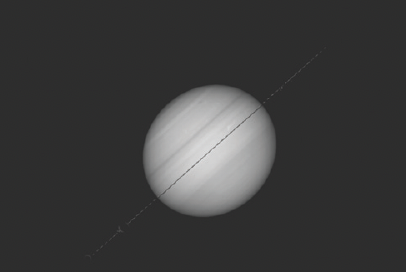
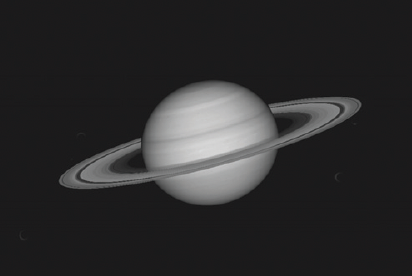
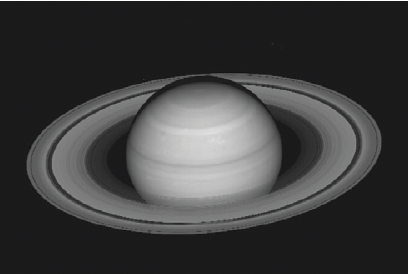
As September ends and October begins, Saturn will be due south at about 10:30pm. The planet will be easier to spot this autumn than it has been for the last few years because it will be higher above the southern horizon – about 25 degrees, an elevation that will continue to increase each year until 2032. Saturn was last at its highest position in our sky in 2003, after which it passed through its lowest point in 2018.
Generally the outer planets appear at their brightest when they are at opposition – 180 degrees from the Sun and due south at midnight. Mars and Saturn in particular can vary widely in brightness from one opposition to another. In the case of Mars this is due to the eccentricity of its orbit, resulting in widely varying distances from Earth at opposition; while with Saturn the variation in brightness is mainly down to how the famous rings are presented to us. Because the Solar System doesn’t lie in a perfectly flat plane, the orbits of the planets and their satellites are tilted at various angles to each other. One effect of this is to allow us view both surfaces of Saturn’s rings. For about 15 years we get to see the northern face of the ring system, followed by another 15 years when the southern face is visible. Saturn looks brightest to us when the rings are tilted at the greatest angle to our line of sight, and dimmest when we happen to be crossing the ringplane.
In March 2025, as the Earth crosses the plane of the rings, they will virtually disappear from our telescopes because they are so thin: a mere 100 metres thick in spite of being about 400,000 kilometres across! Ringplane crossings historically have been valuable to astronomers because they have allowed the discovery of some satellites that wouldn’t otherwise have been visible in the glow from the rings. Thirteen of Saturn’s moons were discovered in this way.
The Planets
For keen-eyed observers Mercury will be visible in the east ahead of sunrise from mid-September to early October. Venus, too, will be a morning object throughout these months, rising soon after 3 am at the beginning of October and shining much more brightly than Mercury. Tiny Mars continues to linger in the evening sky but is now of little interest to Earthbased observers as it is too distant for any surface features to be visible. Saturn, in the constellation of Aquarius, will be visible all evening in the southern sky but much dimmer than Jupiter, which is becoming the standout planet in the late evenings: a bright, creamcoloured “star” in Aries, looming over the eastern horizon at 10 pm in early September and at 8 pm as October begins. Amateur astronomers can look forward to an exciting autumn and winter observing the King and his attendants, the Jovian satellites.
Phases of the Moon
| SEPT | OCT | |
| Last Quarter | 6th | 6th |
| New Moon | 15th | 14th |
| First Quarter | 22nd | 22nd |
| Full Moon | 29th | 28th |
A Partial Eclipse of the Moon will occur on October 28th. Just over 12 percent of the Moon will be immersed in the Earth’s shadow, so a small “bite” will appear to be taken out of the Moon’s upper right, beginning at 8:35pm BST and ending at 9:52pm (duration 77 minutes).

