

In partnership with Claire Jones Gardens
- Clear up fallen leaves, especially from lawns, ponds and beds.
- Raise containers onto pot feet to prevent water logging.
- It’s not too late to plant Tulips for a show of flowers in the spring.
- Prune roses to prevent wind rock.
- Plant winter bedding.
- Put out bird food to encourage winter birds into the garden.
- Cover brassicas with netting if pigeons are a problem.
- Insulate outdoor containers from frost, bubble wrap works well.
- Prevent winter moth damage to fruit trees by using grease bands around the trunks.
- Plant bare root trees, hedging, roses and shrubs before the weather turns really cold.
- Cut down faded perennials that are looking tatty then mulch the surrounding soil with garden compost or organic matter.
- Gather up and bin fallen leaves of roses affected by blackspot so they don’t carry the disease over to next year.
- Protect plants that are borderline hardy such as Agapanthus with a thick layer of mulch or straw.
- Move containers of alpine plants under cover to shelter them from winter rain.
- Replenish gravel around alpines to keep the foliage clear of damp soil, which can cause rotting.
Plant of the season – Gautheria procumbens (common name is Wintergreen, Partridge Berry
or Chequerberry)
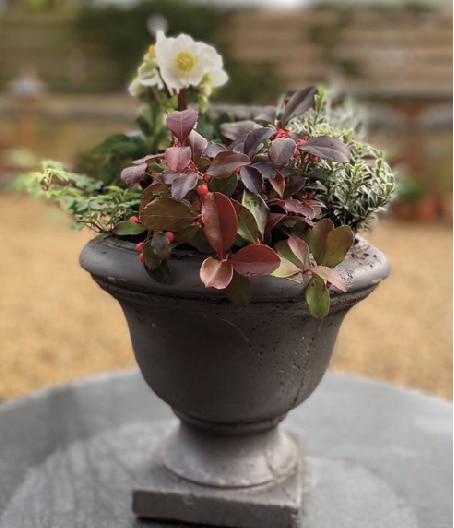
Gaultheria procumbens is a dwarf evergreen shrub, originating from North America. From July to August they have small pinky white bell shaped flowers followed by red berries. It makes an eye‐catching carpet of dark green, red tinted and metallic foliage in winter, complementing its red berries, which nestle among the leaves. It’s easy to grow and makes an attractive edging plant for informal paths, it is great for ground cover and looks superb in a winter planter as pictured. Although it will spread indefinitely it can easily be kept in check by putting a spade through surface roots to keep it contained. It prefers a moist but well drained acidic soil in semi shade, they will tolerate a neutral soil but dislike alkaline soils. The creeping and suckering stems are easily controlled by chopping through them with a spade once a year. The Royal Horticultural Society has given it a prestigious Award of Garden Merit (AGM).

