
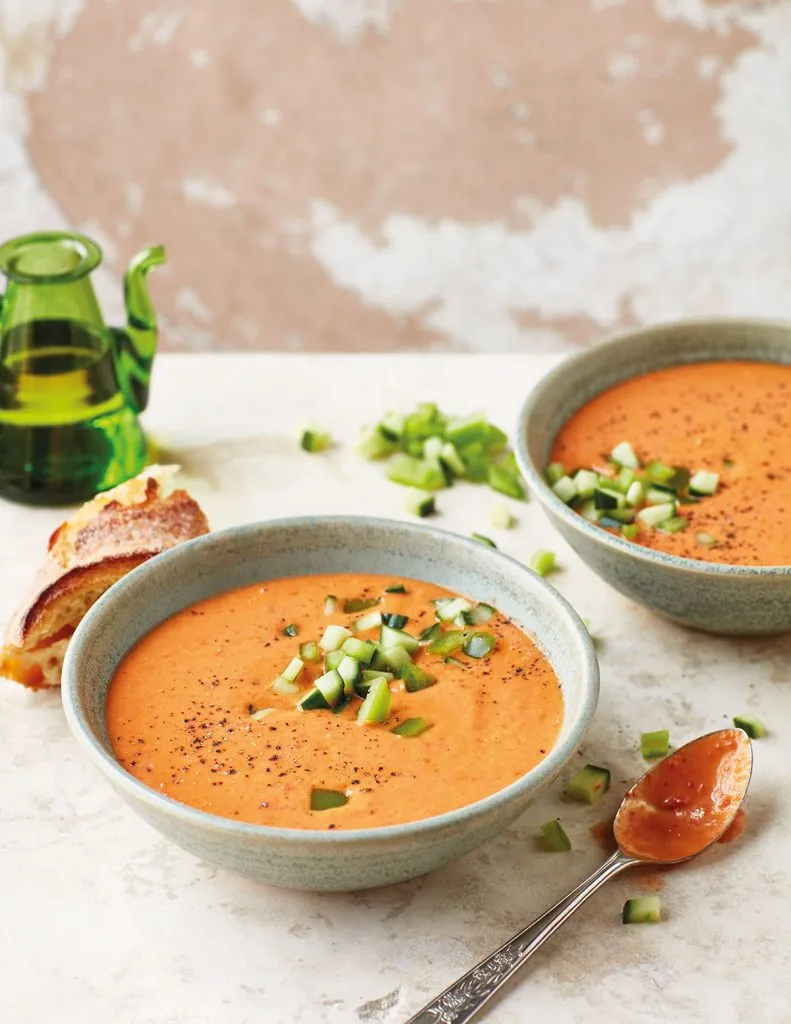
A Taste of Summer
Refreshing and cool and bursting with fresh flavoursome fresh produce, this authentic no cook Andalucian Gazpacho is perfect for summertime entertaining and can be made ahead of time
Gazpacho in Andalucía began centuries ago as a light soup made with stale bread softened with water and flavoured with oil, garlic and vinegar. Later, more sophisticated gazpachos made with almonds became popular in Málaga and Córdoba. With the arrival of the tomato, green (bell) pepper and cucumber from the Americas, a more colourful and fresher version became a staple of the Andalucian kitchen, especially in summer.
When flavoursome tomatoes are not available you can greatly enhance the flavour of the gazpacho by macerating the vegetables already chopped and all the rest of the ingredients for at least 2–3 hours, or better overnight, before blending. To obtain the texture Andalucians consider the best, which is slightly grainy, gazpachos used to be prepared using a pestle and mortar but today the electric blender does a good job.
Andalucian Gazpacho
COURSE: lunch
CUISINE: Spanish
SERVINGS: 6
AUTHOR: María José Sevilla
Ingredients
- 50 g stale bread crusts removed and crumbled
- 1 kg 2 1/4 lb. ripe tasty tomatoes chopped
- 1 green bell pepper deseeded and chopped
- 1-2 garlic cloves peeled
- 1 cucumber peeled and sliced, plus a little extra, diced, to serve
- 100 ml Spanish extra virgin olive oil
- 2-3 tbsp sherry vinegar
- sea salt
- very cold water for topping up
Instructions
Soak the bread in some water and when well-soaked, squeeze the water out.
Place the tomatoes, green (bell) pepper, garlic, cucumber and bread in a food processor or blender. Start blending to a creamy consistency, adding the olive oil, little by little. Season and add vinegar to taste. Add cold water until the desired consistency is reached and blend again.
Place in the fridge until ready to serve, garnished with diced cucumber.
Notes
Gazpacho should be served very cold however to my taste it does not need ice before serving. As it melts, ice dilutes the concentration of the vegetables and therefore flavour.
Recipe from Cocina de Andalucía by María José Sevilla, published by Ryland Peters & Small (£20). Photography by Nassima Rothacker.


